11 Best Shoes for High Arches: A Podiatrist’s Guide to Running Shoes, Work Shoes, and Boots
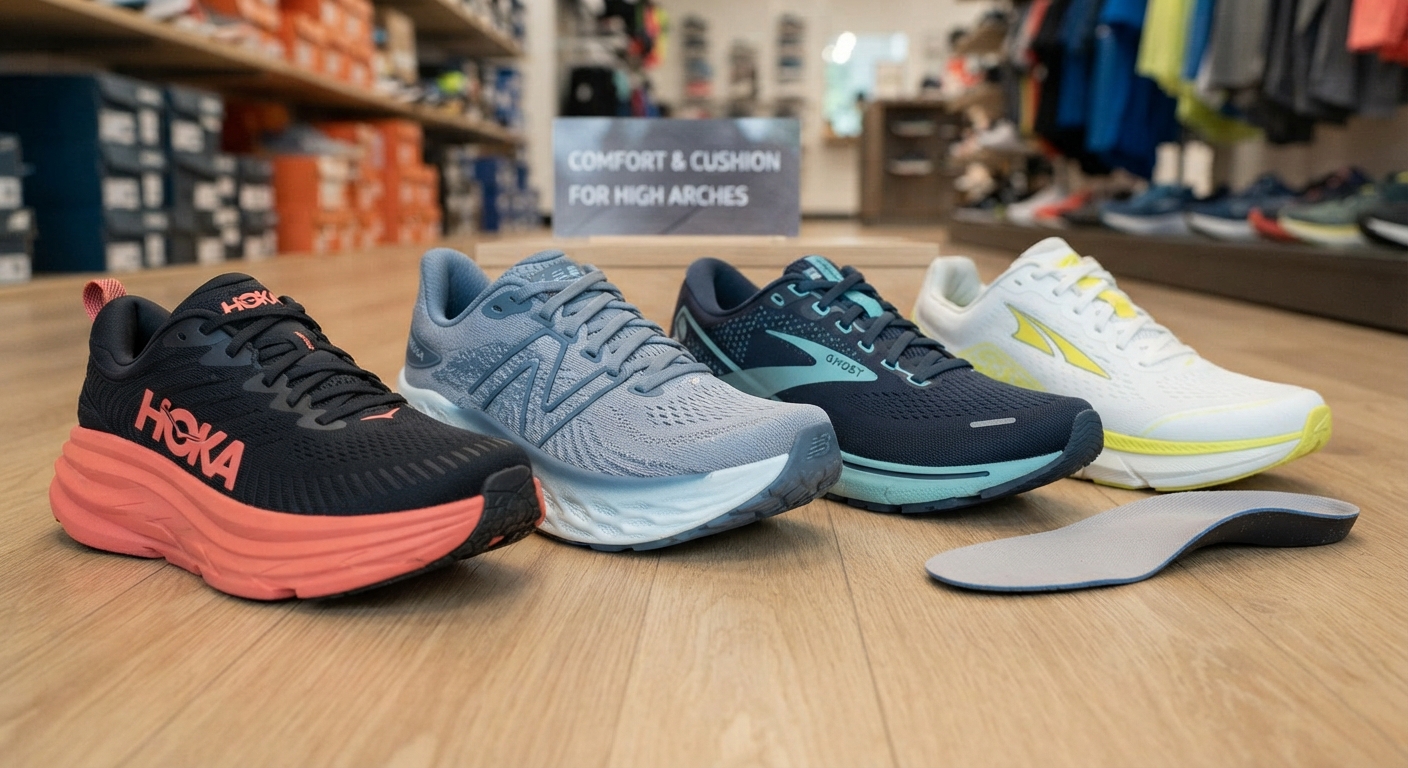
People with high arches usually do best in shoes that combine shock-absorbing cushioning, a secure heel counter, and enough midfoot structure. The main concept here is to prevent pressure from concentrating under the heel and forefoot. The “right” amount of arch support is patient dependent, and includes an assessment of how stiff the foot is, how arthritic it is, and how much contractures there are to the surrounding joints. All of these matter in a cavus foot. The fit and cushioning matter much more than the label. Here are the shoes I discuss with my patients at WeTreatFeet Podiatry.
Athletic shoes
- HOKA Bondi 9 (https://amzn.to/3Sh1j1D)
This is a good choice for walking, standing, and easy running in cavus feet. It has a thick, protective midsole, that provides comfort to a higher arch. I recommend it when a patient’s high arch is associated with heel pain, forefoot soreness, or a history of stress-related discomfort, assuming the heel and midfoot fit securely
- Brooks Glycerin 23 (https://amzn.to/4xO8Wfi)
This is a neutral, high-cushion running shoe that works well for many people with a rigid high arch. It allows for increased impact attenuation, but doesn’t have any additional posting. It is especially useful for runners who feel beaten up through the heel or ball of the foot after mileage.
- ASICS GEL-Nimbus 27 (https://amzn.to/4x7Liue)
The GEL-Nimbus is another soft, neutral option with a smooth ride and a breathable upper. I would consider it for a patient with a high arch who wants a dedicated walking or running shoe and does not need a highly controlling motion-control platform.
- New Balance Fresh Foam X Morev6 (https://amzn.to/4gdW76R)
This has a broad base and deep cushioning, make this a reasonable option for high-arched walkers and runners who want a stable-feeling max-cushion shoe. It is also worth trying for patients who need extra depth to accommodate an orthotic. Also note, that this is list listed as a frequently returned item despite a 4.4 start rating
- Altra FWD Via 2 (https://amzn.to/4bWRFbk)
This shoe will work for patients who prefer a roomy toe box, and want cushioning without a narrow forefoot. I would introduce it gradually, especially for anyone accustomed to a higher-heeled running shoe, because a lower-drop design can increase calf and Achilles’ loading.
- Saucony Freedom (https://amzn.to/4zBSlNw)
When it comes to a lighter neutral trainer with cushioning, this is the shoe. It will suit an active person with high arches who dislikes a bulky shoe. It is better for patients whose foot is stable enough for a flexible, everyday trainer, and who do not require custom orthotic.
Flats and work shoes
- Dansko Professional clog (https://amzn.to/4xBnwGE)
For clinicians, teachers, retail workers, nurses, and others who stand for hours, the firm platform, rocker sole, and supportive footbed can reduce repeated forefoot bending and improve underfoot comfort. It is not the best choice for everyone, particularly someone with ankle instability or a very narrow heel, so a trial fit matter
- Dansko XP 2.0 (https://amzn.to/3S8NUsD)
The XP 2.0 is a practical shoe for people who need more traction and cushioning than a traditional dress shoe. I would favor it for long shifts, but I would make sure the heel is not slipping, because clogs still require reasonable gait stability.
## Boots
- Blundstone Chelsea boot (https://amzn.to/4fZQA4W)
This is a durable, everyday boot with shock absorption and a cushioned footbed. It is easier to use with an aftermarket insole than many styles of Chelsea boots. For a high-arched foot, it has enough instep volume and confirm that the elastic-sided upper. This prevents pressing on the top of the arch.
- Sorel Emelie III Chelsea boot (https://amzn.to/4xfpOeM)
This is a reasonable dress-casual option for fall and winter because it gives more rearfoot coverage and outsole protection than a flat. I would reserve it for lower-mileage city wear unless the individual finds the stock footbed sufficiently cushioned or can add a thin insole without crowding the shoe.
- Keen Targhee IV waterproof boot (https://amzn.to/3Sba5hQ)
For hiking, travel, or wet-weather walking, the Targhee line offers a protective outsole and a secure lacing system that can be adjusted over a prominent instep. High-arched patients who have lateral ankle instability often do better with a lace-up boot like this than with a pull-on style.
## What We Tell Patients at WeTreatFeet POdiatry
I avoid telling patients that “high arch support” alone solves the problem. A cavus or high-arched foot often has poor shock absorption. When I discuss this with patients, I look first for cushioning under the heel and forefoot, followed by a stable heel counter, a secure fit, and enough removable-footbed depth for an insert if needed.
In practice, I tell patients to try shoes late in the day, wear their usual socks, and walk on a hard surface before committing. If they have recurring ankle sprains, lateral foot pain, callus buildup under the first or fifth metatarsal, repeated stress injuries, numbness, or diabetes, they should see a podiatrist to discuss styles, rather than relying on a retail shoe recommendation alone.
Foot or ankle pain?
Our team is here to help — book a visit at any of our 13 locations.