
What are Plantar Warts
Plantar warts are noncancerous skin growths that appear on the soles of the feet, caused by the human papillomavirus (HPV). They develop when the virus enters
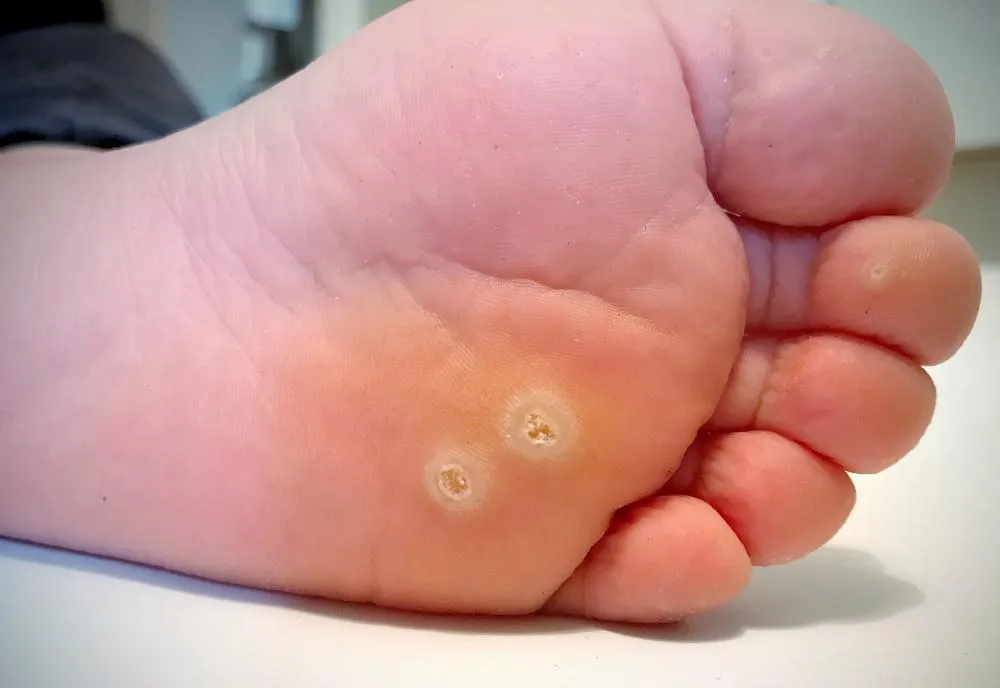
Plantar warts are noncancerous skin growths that appear on the soles of the feet, caused by the human papillomavirus (HPV). They develop when the virus enters your body through tiny cuts or breaks in the skin on the bottom of your feet. Plantar warts are often mistaken for corns or calluses due to their rough texture and similar appearance.
Plantar warts can sometimes go away on their own, but this can take a long time. If they are causing discomfort or spreading, treatments are available. These may include salicylic acid preparations, cryotherapy (freezing the wart), laser treatment, or surgical removal. Because warts can spread, it's important to avoid picking at them and to keep feet clean and dry.
Plantar warts are usually painless, but they can be uncomfortable, especially when you walk. They are common, especially in children and young adults. They are usually harmless, but they can be difficult to get rid of.
Major Causes of Plantar Warts
- Direct Contact- Walking barefoot in public areas where the virus is present can lead to infection
- Weak Immune System - Individuals with weakened immune systems are more susceptible to HPV infections, including plantar warts
- Repeated HPV Exposure - Frequent exposure to HPV, especially in communal bathing areas, increases the risk of developing warts
- Skin Trauma - Existing cuts, scrapes, or cracks in the skin of the feet can make it easier for the virus to enter and cause warts
- Age Factor - Plantar warts are more common in children and teenagers due to their more frequent use of communal showers and locker rooms, and possibly because their immune systems haven't yet built up defenses against HPV
- Moist Environments - HPV thrives in moist environments, so people who spend a lot of time with their feet in water or who sweat excessively are at higher risk.
Signs and Symptoms of Plantar Warts
Appearance
They often look like small, fleshy lesions or growths on the feet. The warts may have a rough, grainy surface and can appear singly or in clusters
Location
Typically found on the soles of the feet, especially on pressure points like the heels or balls of the feet.
Pain and Discomfort
Plantar warts can be painful, especially when standing or walking. The discomfort is often described as feeling like a stone in the shoe
Black Pinpoints
These are often referred to as wart seeds, but they are actually small, clotted blood vessels
Change in Skin Texture
The skin over the wart may become thickened or calloused
Plantar Warts Treatment
- Over-the-counter wart removers
- Prescription wart removers
- Cryotherapy (freezing)
- Electrocautery (burning)
- Laser treatment
- Surgery
Experiencing Foot or Ankle Pain?
We're here to help. Connect with our expert doctors today.
Related Podiatric Skin Disorders
Athlete's Foot
Athlete's foot symptoms, causes, treatment & prevention. If it doesn't improve in 7–14 days, contact our Baltimore, Maryland podiatrists for diagnosis and care.
Learn more →Ingrown Toenails
Discover top treatments for ingrown toenails at WeTreatFeet Podiatry. Say goodbye to pain and hello to comfort with our expert podiatry services.
Learn more →Toenail Fungus
Discover effective remedies to cure toenail fungus and restore healthy nails. Say farewell to discomfort and embarrassment with these proven solutions.
Learn more →Onychomycosis (Fungal Nail)
Onychomycosis is the medical term for fungal nail infection — chronic, contagious, and treatable.
Learn more →