Tai Chi Walking Method for Better Posture and Balance | Maryland Podiatrist Explains
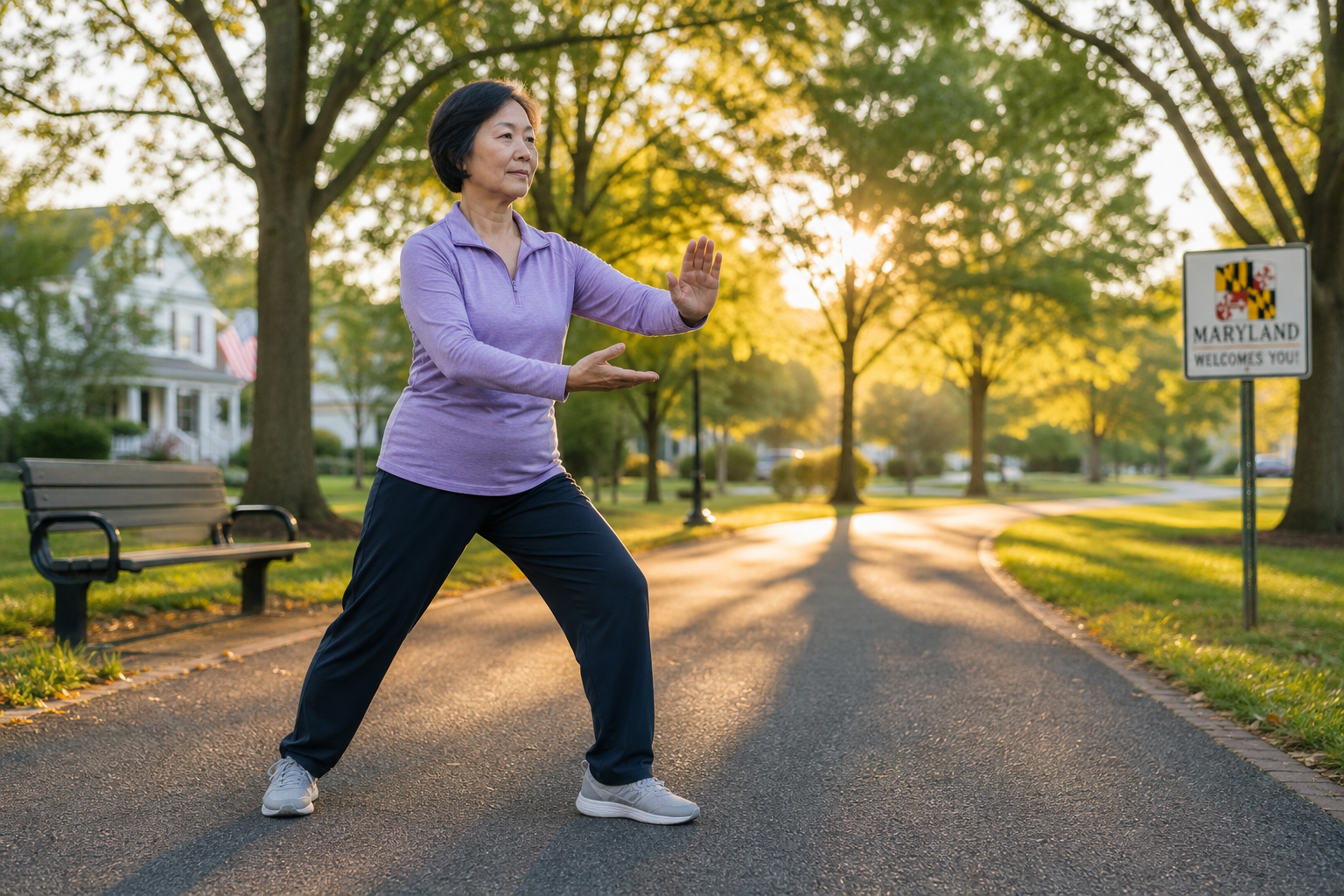
Tai Chi Walking Method for Better Posture and Balance | Maryland Podiatrist Explains
I’ve been talking more with my patients about not just moving, but moving well. The way you walk, stand, and carry yourself shows up in your feet, and then in my office. Over the last few months, I’ve had several patients mention the “Tai Chi walking method” to me during a visit. Some are patients over 60, others are runners in their 30s who were trying to fix their form.
First, what is the Tai Chi walking method?
From what I see in the tai chi and fitness literature, Tai Chi walking is not just “slow walking.” It’s a deliberate stepping pattern where you soften your knees, shift your weight fully onto one leg, then place the other foot heel‑first and slowly roll through the foot before you transfer your weight. You stay upright, keep your core lightly engaged, and move your arms in a smooth, controlled way that matches your steps. In other words, each step is intentional. There’s a full “step → place → shift” cycle instead of the usual push‑off and half‑thought‑through stride I see in a lot of my patients.
Second, how can this help improve posture?
In my world, posture is not an abstract idea. It’s that subtle forward head position I spot when a patient walks down the hallway, the collapsed mid‑foot I see when they stand on the scale, the locked knees that show up in chronic low‑back complaints. Tai Chi walking, when done correctly, seems to train upright alignment. It involves head up, chin slightly tucked, spine lengthened, hips centered, knees softly bent instead of jammed backward. The slow pace and mindful weight transfer make people notice where their body is in space. You’re basically practicing micro‑corrections with every step. Over time this can strengthen the deep stabilizer muscles around the spine and hips, improve knee‑over‑toe alignment, and reduce strain on the lower back.
Third, what other benefits does the Tai Chi walking method have?
The main themes I keep seeing in the research and expert commentary include:
- It improves balance and single‑leg stability. Because each step requires you to fully shift onto one leg, Tai Chi walking trains the ability to stand on one leg without wobbling, which is critical for fall prevention, especially in older adults.
- It develops joint control and leg strength with low impact. The slow, controlled transitions reduce joint stress compared with pounding on the pavement. The muscles around the knees, ankles, and hips work in a more coordinated way to support the joints.
- It boosts body awareness and coordination. You’re paying attention to foot placement, weight distribution, breath, and arm movement all at once. That kind of mindful movement can translate into better everyday walking, standing, and even how someone climbs stairs.
There also seem to be mental and emotional benefits. Several sources mention reduced stress, better mood, and a meditative quality to the practice. I’ve seen this indirectly in my patients too. The ones who stick with mindful movement practices often manage their chronic pain better. They report less fear of falling and feel more in control of their bodies.
Fourth, how should someone incorporate the Tai Chi walking method into their daily routine, and how often should they practice it?
Most structured tai chi programs use sessions around 20–60 minutes, two to three times per week, for general tai chi practice. Many experts say that shorter daily practice is also very reasonable, and that the body doesn’t need a “recovery day” between gentle tai chi sessions.
Tai Chi walking itself can start as a very short daily routine: even 5–10 minutes of slow, deliberate walking in a safe space (living room, hallway, flat sidewalk) with comfortable, flat‑soled shoes. Beginners often do forward walking first, then add backward walking and gentle turns as their balance improves.
In my world, the sweet spot for many of my patients would be something like: start with 5 minutes once a day, preferably when you’re not rushed and can focus, and slowly build up to 10–20 minutes on most days of the week if your joints tolerate it. Always within your comfort zone. If the knees, hips, or feet complain in a sharp way, we adjust. That’s where I’d like your expert input: how do you structure progression, and what safety cues do you emphasize for people with arthritis, neuropathy, or prior falls?
I’d also like to comment briefly on practical starting advice. Things like: typical stance width, how much to bend the knees, what “soft joints” really feel like in practice, how to breathe, and whether you prefer indoor or outdoor practice for beginners. These micro‑details matter. I once watched a patient demonstrate her “tai chi walking” in the hallway and she was basically shuffling with locked knees. Well intentioned, but not helpful. Clear, simple cues make a big difference.
Foot or ankle pain?
Our team is here to help — book a visit at any of our 13 locations.