Parts of a Shoe for Plantar Fasciitis | Heel Pain Shoe Anatomy Guide
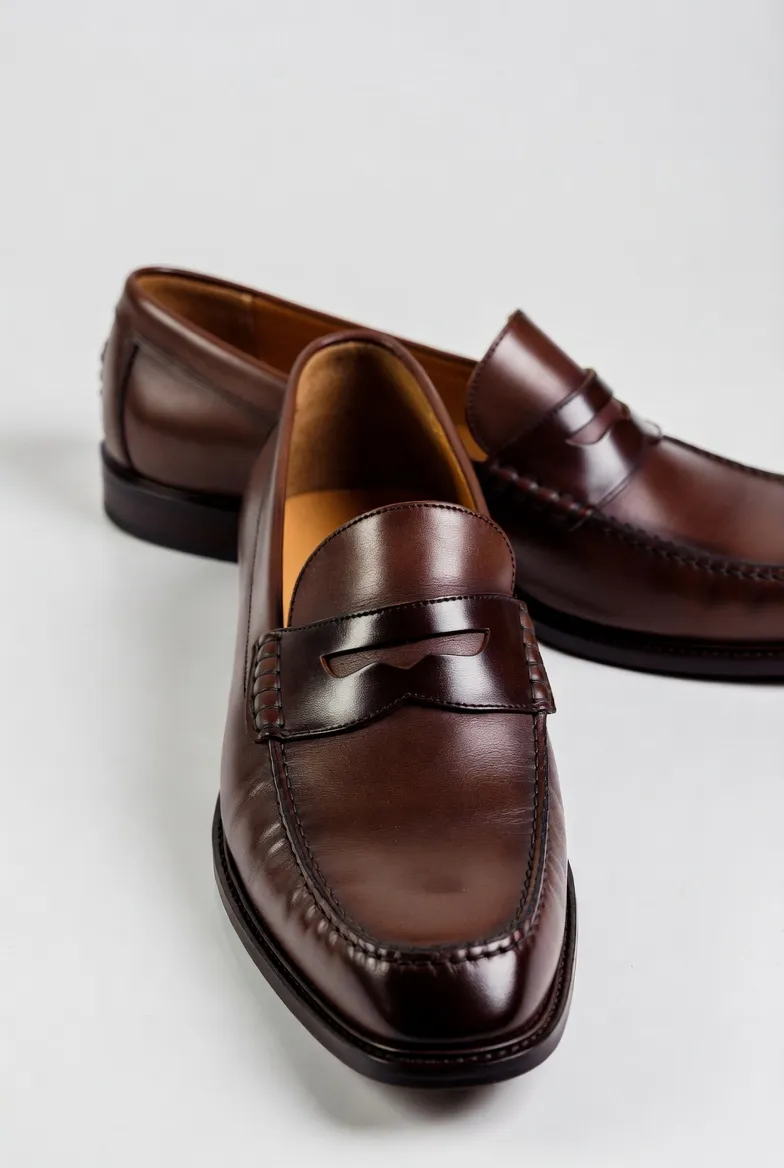
When we talk about parts of a shoe and how they relate to foot and heel pain, it helps to break a shoe into three main zones: the upper, the midsole, and the outsole, plus the layers inside the shoe that actually touch your foot.
At WeTreatFeet Podiatry, we pay attention to how those parts share load. A well-designed shoe should help center the heel, support the arch, and control motion through the midfoot instead of letting the foot collapse and twist with every step.
Parts of a Shoe
Bottom view diagram of an athletic shoe sole highlighting the outsole, flex grooves, midfoot shank, and heel landing zone that work together to improve stability and reduce plantar fasciitis heel pain.
What Does the Upper Do?
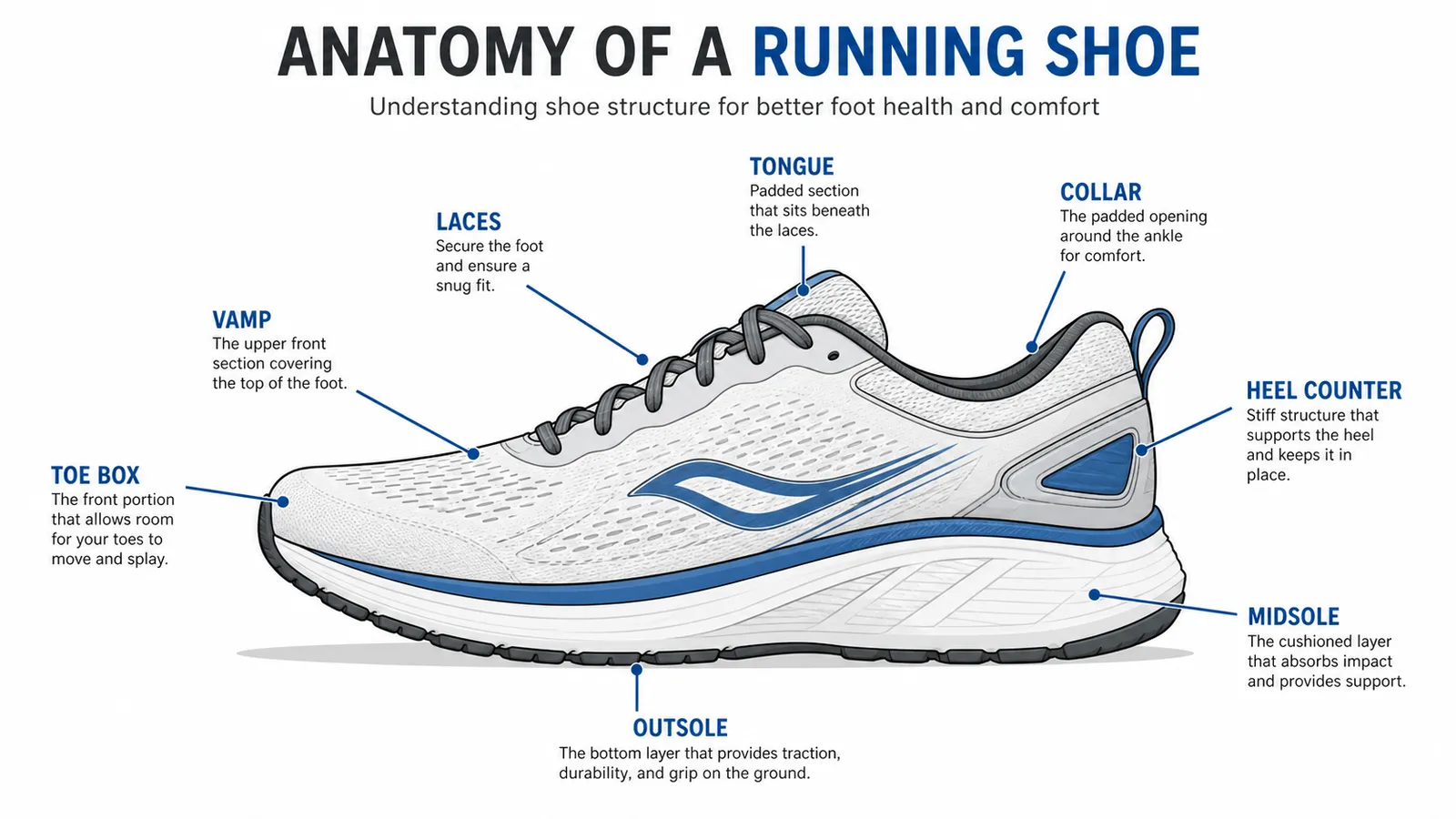
The upper is everything that wraps around the top and sides of your foot above the sole. It includes the toe box, vamp, quarters, tongue, laces, eyelets, collar, and heel counter. Each part plays a slightly different role in comfort, fit, and control.
- Toe box and vamp
The toe box is the front space where your toes sit, while the vamp is the material over the forefoot between the toe and the laces. For heel pain and plantar fasciitis, a roomy toe box matters because cramped toes can change how you push off and increase strain through the arch and plantar fascia. - Quarters and collar
The quarters wrap around the sides and back of the shoe, while the collar is the padded rim around the ankle. Together, they help keep the shoe anchored to the foot. If the heel slips too much, people often grip with their toes without realizing it, which can overload the arch. - Tongue, laces, and eyelets
The tongue sits under the laces, and the eyelets guide the laces across the midfoot. These parts let you fine-tune the fit so the foot feels secure without being squeezed or sliding forward. - Heel counter
The heel counter is the stiff cup at the back of the shoe that wraps around the heel bone. For plantar fasciitis and chronic heel pain, this is one of the most important parts because a firm heel counter helps limit side-to-side wobble and excessive rolling inward. That reduces the pull on the plantar fascia with every step.
Materials matter too. Leather tends to be more durable but usually needs more break-in time. Knit and mesh uppers are breathable and comfortable right away, but they can lose structure faster. For people who stand all day on hard floors around Owings Mills and Baltimore, a structured synthetic or leather upper with a secure heel is often the better long-term choice.
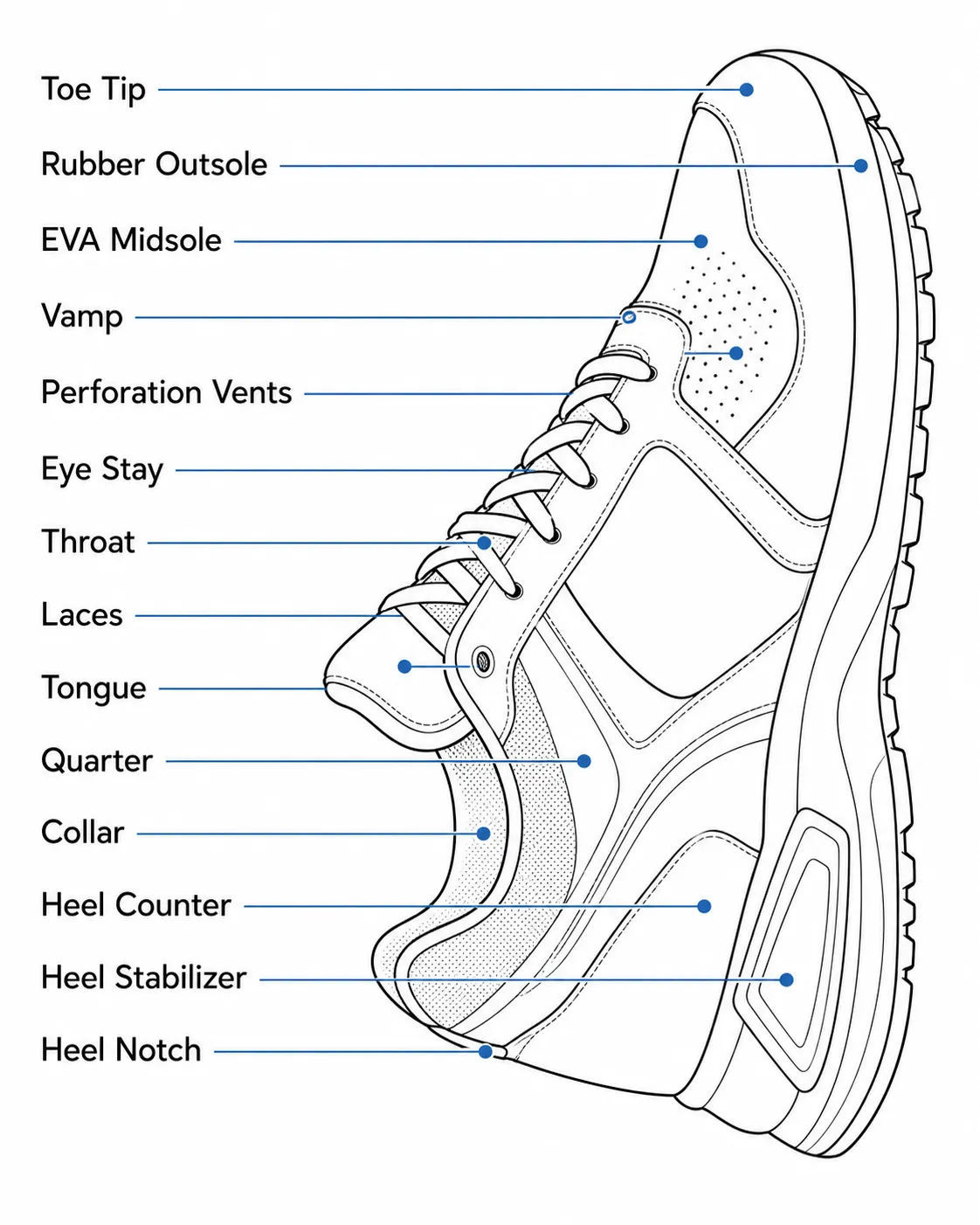
Labeled side-view diagram of an athletic shoe showing key parts, including the toe tip, vamp, laces, collar, heel counter, EVA midsole, and rubber outsole, that affect heel pain and plantar fasciitis support.
What Do the Midsole, Insole, and Outsole Do?
Think of the bottom of the shoe as a layered system: the insole sits on top, the midsole runs through the middle, and the outsole is the part that contacts the ground.
- Insole or sockliner
The insole is the removable layer your foot rests on. In many shoes it adds a little cushioning and maybe some mild contour, but it usually does not offer serious motion control. That is why many people with plantar fasciitis do better when the right shoe is paired with an orthotic or supportive insert. - Midsole
The midsole is the foam layer that connects the upper to the outsole and handles most of the shock absorption. In stability shoes, the midsole may use firmer foam or built-in guide features to limit overpronation and reduce stress on the plantar fascia. Too soft, and the heel and arch end up doing too much of the work. - Outsole
The outsole is the rubber on the bottom of the shoe. It provides traction and durability, but it also affects stability. A wider outsole under the heel and midfoot creates a broader platform, which is exactly what we want in many patients with plantar fasciitis and heel pain.
How Shoe Parts Affect Plantar Fasciitis and Heel Pain
If you strip away the marketing, a good plantar fasciitis shoe does a few basic things really well: it centers the heel, supports the arch, controls motion through the midfoot, and stays comfortable enough to wear all day.
Here are the structural features we usually want patients to look for:
- Firm heel counter
Squeeze the heel cup. If it collapses easily, it probably will not stabilize your heel well enough. A firm heel counter helps reduce excess motion and may take stress off the plantar fascia where it attaches near the heel. - Torsional rigidity
Hold the shoe at both ends and twist it. A plantar-fasciitis-friendly shoe should resist twisting through the midfoot. Too much motion there can make the arch work harder than it should. - Flex point at the ball of the foot
Bend the shoe and make sure it flexes near the forefoot, not through the middle of the arch. If it folds under the arch, that is usually a sign the shoe is too flexible for someone who needs support. - Wide, stable sole and moderate heel-to-toe drop
A broader base under the heel can improve stability, while a moderate heel-to-toe drop can sometimes reduce tension on the plantar fascia, especially in people with tight calves. - Cushioned, but not overly soft, heel
Shock absorption matters, especially under the heel. But shoes that feel like marshmallows often let the foot sink and roll too much. Most people do better with cushioning that is balanced by structure.
When those parts work together, the shoe should feel secure in the heel, supportive under the arch, and stable through the middle without feeling stiff or clunky. That balance is often what makes the difference between a shoe that feels nice for five minutes and one that actually helps over the course of a long day.

WeTreatFeet Podiatry | 410-363-4343
Frequently Asked Questions About Parts of a Shoe and Heel Pain
1. What are the most important parts of a shoe for plantar fasciitis?
For plantar fasciitis, the big three are the heel counter, the midsole, and the insole. A firm heel counter keeps the heel centered, while a supportive midsole and insole help reduce stress through the arch and plantar fascia.
2. How does the heel counter help with heel pain?
The heel counter is the stiff cup at the back of the shoe. When it is firm and supportive, it helps stabilize the heel, cut down on side-to-side wobble, and reduce excess motion that can irritate the plantar fascia.
3. What should I look for in the midsole if I have plantar fasciitis?
Look for a midsole that feels cushioned but not overly soft. A supportive midsole should resist twisting, flex near the ball of the foot, and help control pronation instead of letting the arch collapse.
4. Does the toe box matter for heel and arch pain?
Yes. A narrow toe box can crowd the toes and change the way the foot pushes off the ground, which can increase strain through the arch. A roomy toe box allows more natural toe splay and better balance.
5. Are softer shoes always better for heel pain?
No. A shoe can feel soft underfoot and still be the wrong choice if it lacks structure. Most people with plantar fasciitis do better in a shoe that combines cushioning with a stable base and firm heel support.
6. How can I test a shoe in the store for plantar fasciitis support?
There are three easy tests: squeeze the heel cup, twist the shoe through the midfoot, and bend it to see where it flexes. If the heel collapses easily, the shoe twists like a towel, or it folds through the arch, it is probably not supportive enough.
7. What is the difference between an insole and an orthotic?
The stock insole that comes with most shoes adds comfort, but it usually does not control motion very well. An orthotic is designed to support the arch, guide the foot, and improve heel position more effectively.
8. Do people who stand all day need different shoe features than runners?
The basics are similar, but the emphasis changes. People on hard floors all day usually need more heel cushioning, a stable platform, and a structured upper, while runners may also care more about transition, weight, and forefoot flexibility.
9. How often should I replace supportive shoes for plantar fasciitis?
Many supportive walking and running shoes begin to lose structure somewhere around 300 to 500 miles of use, or every 6 to 9 months for many people. Once the midsole breaks down, the support you depend on usually drops off too.
10. Does heel-to-toe drop matter for plantar fasciitis?
It can. Very flat shoes may increase strain on the plantar fascia, especially in people with tight calves. A moderate heel-to-toe drop can sometimes help reduce tension and make the shoe feel more comfortable during walking.
Want to learn more about Dr. Mikel Daniels? Click here to go to www.ThePodiatryVoice.com
Foot or ankle pain?
Our team is here to help — book a visit at any of our 13 locations.