7 Powerful Ways WeTreatFeet Podiatry Leads in Diabetic Wound Healing in 2026

When it comes to diabetic wound healing, time is tissue. At WeTreatFeet Podiatry, we’re not just treating wounds—we’re leading the fight against amputation with advanced modalities, innovative therapies, and a patient-first approach. As a recognized LEAP Center of Excellence, our team is on the front lines, using the latest science and technology to help patients heal, stay healed, and preserve their mobility.
Why Diabetic Wound Healing Is So Challenging
Diabetes is a chronic disease that affects nearly every system in the body, but its impact on wound healing is especially severe. High blood sugar damages nerves (peripheral neuropathy) and blood vessels (peripheral vascular disease), making it harder for wounds to heal and easier for infections to take hold920. Even minor cuts can quickly escalate into chronic ulcers, putting patients at risk for serious complications—including amputation.
That’s why diabetic foot care isn’t just a specialty at WeTreatFeet Podiatry—it’s our mission. Our approach combines early detection, advanced wound care, and comprehensive diabetes management to keep our patients one step ahead of complications
1. Advanced Wound Modalities: Vashe Wound Solution and Beyond
One of the standout tools in our arsenal is Vashe Wound Solution, a next-generation wound cleanser based on pure hypochlorous acid (HOCl). Vashe is designed to:
- Cleanse, irrigate, and debride acute and chronic wounds
- Disrupt bacterial biofilms and reduce infection risk
- Support a moist, skin-friendly healing environment
Unlike harsh antiseptics, Vashe is biocompatible and non-cytotoxic, making it safe for even the most sensitive wounds. It’s particularly effective in breaking down biofilms—a major barrier to healing in chronic diabetic ulcers—while being gentle enough for daily use.
But Vashe is just one part of our comprehensive wound care strategy. WeTreatFeet Podiatry also offers:
- Negative pressure wound therapy (NPWT)
- Bioengineered tissue grafts
- Skin substitutes and advanced dressings
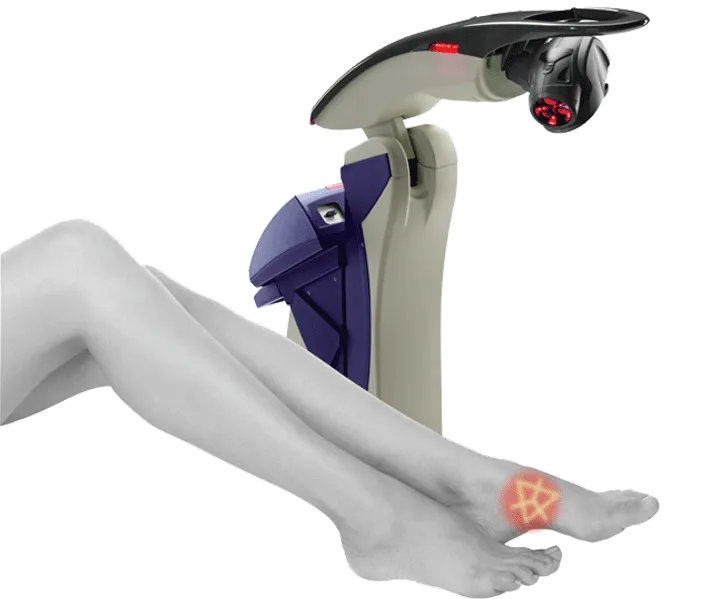
- Laser therapy for pain management and accelerated healing
- Sharp debridement and offloading techniques
Each patient receives a personalized treatment plan, leveraging the best available modalities for their unique needs.
2. LEAP Center of Excellence: Leading Amputation Prevention
WeTreatFeet Podiatry is proud to be a LEAP (Lower Extremity Amputation Prevention) Center of Excellence, a distinction that reflects our commitment to proactive, evidence-based diabetic foot care5. As part of the Arche LEAP Collaborative, our podiatrists are trained in the latest protocols for early detection, risk assessment, and patient education.
What does this mean for you?
- Regular, comprehensive foot exams
- Early identification of risk factors like neuropathy, poor circulation, and deformities
- Immediate intervention for any sign of ulceration or infection
- Ongoing education to empower patients in their self-care
This multidisciplinary, team-based approach is proven to reduce the risk of diabetic foot ulcers and amputations.
3. The Role of Diabetes in Wound Healing
Why do wounds heal so slowly in people with diabetes? The answer lies in a combination of factors:
- Reduced blood flow: Damaged blood vessels mean less oxygen and fewer nutrients reach the wound.
- Nerve damage: Loss of sensation means injuries often go unnoticed until they worsen.
- Impaired immune response: High blood sugar weakens the body’s natural defenses, making infections more likely.
- Chronic inflammation: Diabetes keeps the body in a pro-inflammatory state, delaying healing and increasing scarring.
These challenges demand a comprehensive, aggressive approach to wound care—one that WeTreatFeet Podiatry delivers every day.
4. GLP-1 Medications: A New Frontier in Wound Healing
Recent research has highlighted the potential of GLP-1 receptor agonists—medications like semaglutide and liraglutide—not just for blood sugar control, but as active agents in wound healing Here’s how they help:
- Better glycemic control: Lower blood sugar means less vascular and nerve damage, creating a more favorable environment for healing
- Direct wound healing effects: GLP-1 agonists can reduce inflammation, promote angiogenesis (new blood vessel growth), and stimulate the migration of skin cells (keratinocytes) to close wounds faster
- Reduced scarring and infection: By modulating immune responses and supporting healthy tissue regeneration, these medications may lower the risk of chronic wounds and related complications.
While GLP-1 medications are not a substitute for local wound care, they represent a promising adjunct for patients struggling with chronic ulcers. Our podiatrists work closely with endocrinologists to ensure every patient’s diabetes management plan supports optimal wound healing.
5. Comprehensive, Patient-Centered Care
At WeTreatFeet Podiatry, wound care is never one-size-fits-all. Our team draws on decades of experience and the latest science to create individualized plans that address every aspect of healing:
- Wound assessment and documentation
- Debridement and infection management
- Advanced dressings and skin substitutes
- Pressure offloading and custom orthotics
- Vascular assessment and referral when needed
- Patient education for daily self-care and prevention
We also offer convenient locations throughout Maryland, DC, and Pennsylvania, making it easy to access expert care when you need it most6.
6. Internal Links: Explore More at WeTreatFeet
For more on our approach to diabetic foot care and amputation prevention, visit our Diabetic Foot Care & Amputation Prevention page. To learn about our full range of wound care services, check out Wound Care & Skin Grafting. Interested in our Rosedale location? See what we offer in Rosedale, MD.
7. The Future of Wound Care: Innovation and Hope
The wound care landscape is evolving rapidly, with new technologies like AI-powered wound assessment, smart dressings, and bioengineered tissues on the horizon At WeTreatFeet Podiatry, we’re committed to staying at the forefront of these advances, bringing the best of modern medicine to our patients every day.
Don’t let a wound put your future at risk. If you have diabetes or a chronic foot wound, schedule an appointment with WeTreatFeet Podiatry today. Our team is ready to help you heal, stay healed, and keep moving forward.
Foot or ankle pain?
Our team is here to help — book a visit at any of our 13 locations.